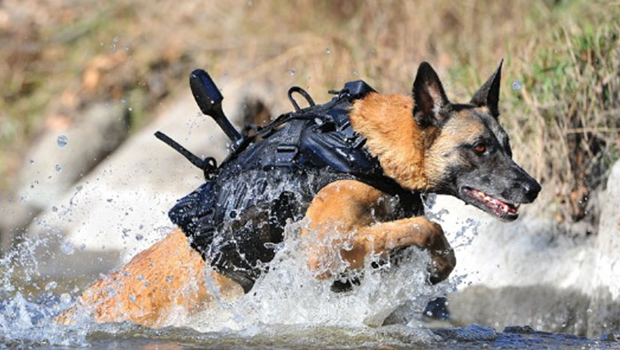
German shepherd, the best known police dog all over the world, is a noble breed that is one of the most dependable dogs. With proper training techniques, this dog can be taught to do wonders.
 |
| germanshepherdshirt - German Shepherd Training Tips and Techniques |
The German shepherd was bred for herding and guarding sheep by the Germans. This noble canine is also known as the Alsatian dog. It was christened Alsatian by the Britishers during the World War II, after the German-French border area of Alsace-Lorraine. This dog is also known as the 'Deutscher Schaferhund'. The American Kennel Club, first registered this dog in 1908.
- Physical Appearance
This handsome dog comes in a coat that is black, with tan, sable or all black coat markings. It may also come in blue, liver and white coats, but these are mostly considered as faults. The nose is often black.
It is a muscular dog that has a sturdy and slightly elongated build. The bone structure is solid, but light. The forehead is a bit convex. The ears are wide at the base, upright, turned forward and pointed. Puppies under six months have slightly droopy ears. The almond-shaped eyes are dark and lively, and express intelligence.
 |
| germanshepherdshirt - German Shepherd Training Tips and Techniques |
These dogs have muscular front legs and shoulders, with sturdy and thick thighs. The feet are rounded with really hard soles. The tail is bushy and reaches almost the hocks of the dog. It hangs down when the dog is at ease.
- Temperament
These dogs know no fear. They are direct and alert dogs. They have a bold and cheerful personality. These dogs are very obedient to their masters and show an eagerness to learn new training techniques. These dogs are adaptable to dog kennels as an indoor or outdoor arrangement. They are very intelligent dogs and have a calm and confident attitude. These dogs need owners who have an authoritative command over the dog. The training should include the use of canine instincts and the dog should not be treated as a human.
They are strong and well-built dogs, that can be fairly stubborn and show dominance over the owner if proper tricks for training them are not used. The owner or trainer should be able to use a training guide firmly and display authority over the dog. The owner should teach the dog its boundaries and make it adaptable to society. But, never ever use negative training methods like beating, shouting or punishment. This will make the dog even more stubborn and disregard all your training methods.
 |
| germanshepherdshirt - German Shepherd Training Guide |
It is important that the dog learns to associate a command to a particular action. If he is able to comprehend this simple connection, training the dog will be an easy task. Never teach the dog too many commands simultaneously. You are just confusing the dog and making things difficult for yourself. Once the dog learns a trick, begin with a new one.
- Training Tips
These versatile dogs use their instincts to master the tricks and commands. The best way to train them is by using monosyllables. This means use one worded commands like "yes", "no", "sit", "good","bad", etc. and not bombard the dog with multiple words. This confuses the dog and leads to improperly executed tricks. Once the dog successfully completes his tasks or command, pat him or reward him with treats.
- Training a German Shepherd Puppy
The training should begin from seven to eight weeks onwards. The puppies' brains readily absorb the commands but may take months to fully comprehend their meanings. This is the best time to show the puppies, games that you want them to play all their lives.
Exercises help the young dogs become stimulated, mentally and physically. Training puppies with tricks is the best way for them to understand the various commands and signals, that will prove to be helpful throughout their adult life. Give treats to the puppies when they correctly respond to your commands.
If the puppies find it difficult to comprehend or give a wrong response to your command, do not punish the dog. Instead use positive reinforcements and make him distinguish the right from the wrong. Treat him on his good dog behavior. Make him obey and trust you with a positive approach. Yelling, scolding and punishing, pushes the dog away from you and make the dog lose its confidence in the owner. Moreover, the dog can become aggressive and easily provoked. You should also properly crate train and potty train German shepherd puppies, to avoid any mishaps in the future.
- Adult Dog Training
If you have adopted an adult German shepherd, do not believe in the adage, "You can't teach an old dog new tricks". It is not the age of the dog, but it is the art of teaching that makes the dog learn. During training sessions, be consistent with your commands. Do not change your commands every time you ask the dog to carry out the same trick. For example, if you use 'sit' the first time, do not change over to 'sit boy' the next time. This will only confuses the poor animal. It is very important to use the same cues every time.
 |
| germanshepherdshirt - Adult German Shepherd Training Guide |
Treat the dog immediately after he does something right. It is necessary to help the dog make a connection between a right action and a treat. If he goes outside the house to urinate by himself, treat him immediately and shower him with praises. This makes him want more of your attention and treats, and he will always relieve himself where he is expected to.
The training should not go on for hours on end. Keep in mind, this is dog training, not a military drill! Keep training the dog throughout the day for just about 5-10 minutes. When training puppies or dogs, remember, they have short attention spans, just like our kids. It is important to keep the dog on the right side when holding the leash in your right hand. You may require many short training sessions, to make the dog fully understand and become comfortable with using a leash.
Use positive reinforcements to train the dog to sit. Hold the treat in front of the dog's nose and lift it back up. Say 'sit' while showing and taking back the treat. This makes the dog fold his legs under him and sit down. The minute your dog sits, give him his treat.
After successfully teaching the dog to sit, it's time to teach him 'down'. Holding the treat in your hand, move the treat down and forward in front of the dog. Say 'down', as you carry out the action. This makes the dog lower his front legs and lay down. Immediately reward him with his treat and shower praises when he does it correctly.
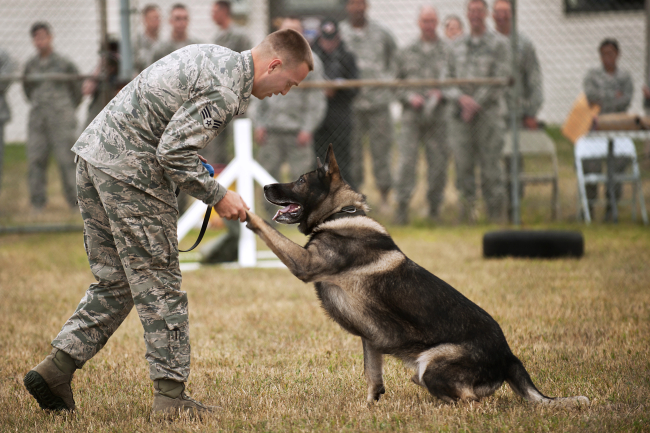
Handshake is one of the most common tricks dogs are taught. It is very easy to teach your dog to shake hands with you when asked to do so. In this case, you need to hold the paw of the dog in your hand and say the word 'handshake'. Emphasize on the word when you pick his paw and shake hands with him/her. Give him a treat and praise him/her well after the exercise. After learning the trick, the dog will automatically raise his paw to you when you say, 'handshake'.
When your German shepherd nips at you, give out a short yell. This high pitch yell, will make him understand that he has hurt you and your feelings. As this is very hard for him to digest, it will stop him from biting you the next time. Also, when teething the puppy may get the urge to bite a lot. In this case, you should provide chewy toys to the dog to help get over the irritation and the desire to bite at things at random.
You should grab the dog by the muzzle, and blow on his nose and using a firm voice say, 'no'. You can even fold your arms and turn your back on him. Do not make any eye contact and ignore him for about 5 minutes. This shows him he has lost your affection and nothing else can prove to be more painful to him than this. Pet him again after 5 minutes and interact with him. Believe me, he will never forget how he hurt you and restrain himself from biting you again.
When training a German shepherd to attack, it should be solely for protection purposes and not to trouble or hurt anyone. German shepherds or rather any dog breed, is not aggressive or vicious. It is the way they are trained and their experience with man, that brings out the aggression in the animal. Be sure you have taught him the 'stop', 'sit', 'heel' commands thoroughly. This will be helpful when you have to stop the dog from attacking. Remember, these are very important training commands to be taught before teaching the dog to attack.
When beginning to train the dog, start with on-leash training. Choose a single word that will be the signal for the dog to begin an attack. Also, have one word for 'stop'. When the attack command is issued, give a slack to the leash. Pull the leash back as you give the 'stop' command. This makes the dog know when to start and stop.
 |
| germanshepherdshirt - German Shepherd Training Tips and Techniques |
Provide a stick to bite train the German shepherd. Teach him to attack the arms and legs of the intruder, to immobilize the offender. Teach the dog to attack when the owner cannot issue a command as well, when this trick is mastered. This will prove useful in situations like when the owner is unconscious or unaware of danger. Make sure you have taught your dog not to accept treats from strangers. You should leave training the dog to bite, to professional trainers. This is because a house dog just needs to know how to chase and bark.
Make sure the dog has mastered the basic obedience training commands like 'sit', 'stay' and 'come'. This helps you control the dog in cases of emergency. You need to train your dog to stay focused and not get distracted by other animals and dogs in heat. You may need to force your German shepherd to stay in place when there are such distractions around. This needs to be done while he is not distracted or affected by them. Make your dog understand not to attack people and animals at random, by helping him socialize.
Train your German shepherd to bark when he hears someone at the door, or senses someone around the house. Make the dog stop barking if the person is known to you or is a friend. If you do not know the person, let your dog bark a bit longer, till you issue a command to stop. You should make sure your dog does not accept food or treats from anyone other than a close family member. Train the dog not to eat anything, other than what is given by you. Make sure your dog is well-fed at all times and does not get tempted to eat food from any stranger.
German shepherds are extremely obedient and loving pet dogs. With proper training techniques, you will have a great pet and a loyal companion. They are quick learners and prove to be a good guard dogs. But, as they are stubborn, it may take time to make them follow you. However, they are smart dogs and will understand your commands quickly. Never use aggression with your dogs, as aggression begets aggression. Love him, but behave like a pack leader, and you will earn an obedient friend for life.